Buy ecorate.eu ?
We are moving the project
ecorate.eu .
Are you interested in purchasing the domain
ecorate.eu ?
domain@kv-gmbh.de · 0541-91531010
Buy ecorate.eu ?
What is a glycosidic bond?
A glycosidic bond is a type of covalent bond that joins a carbohydrate molecule to another group, which can be another carbohydrate or a non-carbohydrate molecule. It is formed through a condensation reaction between the hydroxyl group of one molecule and the anomeric carbon of another molecule, resulting in the loss of a water molecule. Glycosidic bonds are important in the structure of carbohydrates, such as in forming disaccharides like sucrose or polysaccharides like starch. **
What is the glycosidic bond in sucrose?
The glycosidic bond in sucrose is a type of covalent bond that links the glucose and fructose molecules together. It is a specific type of linkage known as an alpha-1,2-glycosidic bond, which forms between the carbon-1 atom of glucose and the carbon-2 atom of fructose. This bond is responsible for the formation of the disaccharide sucrose, which is commonly known as table sugar. **


Similar search terms for Glycosidic
Top-Angebote
Products related to Glycosidic:
-
Lush Living Finds Modern Curve Design Black Hourglass, Sand Clock For Simple Interior, Aesthetic Glass Craft Ornament For Home Decor Modern Curve Design Black Hourglass, Sand Clock For Simple Interior, Aesthetic Glass Craft Ornament For Home DecorAdd a Touch of Elegance to Your Home Bring a modern flair to your home with this Curve Design Black Hourglass Sand Clock. Designed with a sleek, minimalist aesthetic, this sand clock serves as an eyecatching modern style home decor piece. The black...134,97 $*Shipping: 0,00 $Secure redirect to the provider
-
ModernMart Modern Rock Climber Wall Decor Resin Sculpture For Home And Office Inspiration fTransform any space into a symbol of ambition and perseverance with this striking climbing wall sculpture. Designed for those who admire strength, focus, and bold aesthetics, this piece captures the thrill of ascent in a sleek, modern form. Crafted...39,97 $*Shipping: 0,00 $Secure redirect to the provider
-
ModernMart Modern Rock Climber Wall Decor Resin Sculpture For Home And Office Inspiration cTransform any space into a symbol of ambition and perseverance with this striking climbing wall sculpture. Designed for those who admire strength, focus, and bold aesthetics, this piece captures the thrill of ascent in a sleek, modern form. Crafted...39,97 $*Shipping: 0,00 $Secure redirect to the provider




-
What is a glycosidic bond in sucrose?
A glycosidic bond in sucrose is a type of covalent bond that links the glucose and fructose molecules together. It is formed through a condensation reaction, where a molecule of water is removed to join the two sugar molecules. This bond is important for the structure and function of sucrose, as it holds the two sugar molecules together and allows for the storage and transport of energy in plants. **
-
How to draw trehalose in a 2-11 glycosidic linkage?
To draw trehalose in a 2-11 glycosidic linkage, start by drawing two glucose molecules. Connect the first glucose molecule's carbon 2 to the second glucose molecule's carbon 1 with a glycosidic bond. This linkage represents the 2-1 glycosidic bond. Next, add another glucose molecule and connect its carbon 1 to the second glucose molecule's carbon 1 with a glycosidic bond. This linkage represents the 1-1 glycosidic bond. This structure represents trehalose in a 2-1,1 glycosidic linkage. **
-
Why is there a beta-1,4-glycosidic bond in lactose?
The beta-1,4-glycosidic bond in lactose is formed between the glucose and galactose molecules. This bond is important because it determines the structure and properties of lactose. The beta configuration of the glycosidic bond in lactose allows for the formation of a specific three-dimensional structure that is essential for its function as a disaccharide sugar found in milk. This bond also influences the way lactose is digested by the enzyme lactase in the human body. **
-
How do you draw trehalose in a 2-11 glycosidic bond?
To draw trehalose in a 2-11 glycosidic bond, you would first draw two glucose molecules connected by an alpha-1,1 glycosidic bond. Then, you would add another glucose molecule to the first glucose molecule in the 2 position, forming a 1,2 glycosidic bond. Finally, you would add the last glucose molecule to the second glucose molecule in the 1 position, forming a 2,1 glycosidic bond. This structure represents trehalose in a 2-11 glycosidic bond. **

How do you draw trehalose in a 2-11 glycosidic linkage?
To draw trehalose in a 2-11 glycosidic linkage, start by drawing two glucose molecules connected by an alpha-1,1 glycosidic bond. Then, draw another glucose molecule connected to the first glucose molecule in the pair by an alpha-1,2 glycosidic bond. This creates the 2-11 glycosidic linkage in trehalose. The resulting structure should show three glucose molecules connected in a linear fashion with the 2-11 glycosidic linkage between the first and third glucose molecules. **
What are the differences between an ester bond and glycosidic formation?
An ester bond is formed when a carboxyl group of one molecule reacts with a hydroxyl group of another molecule, resulting in the formation of an ester and the release of water. This type of bond is commonly found in lipids and is important for energy storage. On the other hand, glycosidic formation involves the bonding of a sugar molecule to another molecule, typically another sugar or an alcohol, through the reaction between the anomeric carbon of the sugar and a hydroxyl group of the other molecule. This type of bond is important for the formation of carbohydrates and is commonly found in polysaccharides such as starch and cellulose. **
Top-Angebote
Products related to Glycosidic:
-
ModernMart Modern Rock Climber Wall Decor Resin Sculpture For Home And Office Inspiration eTransform any space into a symbol of ambition and perseverance with this striking climbing wall sculpture. Designed for those who admire strength, focus, and bold aesthetics, this piece captures the thrill of ascent in a sleek, modern form. Crafted...39,97 $*Shipping: 0,00 $Secure redirect to the provider
-
Lush Living Finds Modern Style Home Decor, Curve Design Black Hourglass, Aesthetic Sand Clock Glass Craft Modern Style Home Decor, Curve Design Black Hourglass, Aesthetic Sand Clock Glass CraftElevate Your Space with Modern Style: Bring sophistication and elegance to your home with the Curve Design Black Hourglass. This sleek sand clock is more than just a functional timepieceit's an aesthetic centerpiece for your living room, office, or...49,97 $*Shipping: 0,00 $Secure redirect to the provider
-
Lush Living Finds Modern Curve Design Black Hourglass, Sand Clock For Simple Interior, Aesthetic Glass Craft Ornament For Home Decor Modern Curve Design Black Hourglass, Sand Clock For Simple Interior, Aesthetic Glass Craft Ornament For Home DecorAdd a Touch of Elegance to Your Home Bring a modern flair to your home with this Curve Design Black Hourglass Sand Clock. Designed with a sleek, minimalist aesthetic, this sand clock serves as an eyecatching modern style home decor piece. The black...134,97 $*Shipping: 0,00 $Secure redirect to the provider
-
What is a glycosidic bond?
A glycosidic bond is a type of covalent bond that joins a carbohydrate molecule to another group, which can be another carbohydrate or a non-carbohydrate molecule. It is formed through a condensation reaction between the hydroxyl group of one molecule and the anomeric carbon of another molecule, resulting in the loss of a water molecule. Glycosidic bonds are important in the structure of carbohydrates, such as in forming disaccharides like sucrose or polysaccharides like starch. **
-
What is the glycosidic bond in sucrose?
The glycosidic bond in sucrose is a type of covalent bond that links the glucose and fructose molecules together. It is a specific type of linkage known as an alpha-1,2-glycosidic bond, which forms between the carbon-1 atom of glucose and the carbon-2 atom of fructose. This bond is responsible for the formation of the disaccharide sucrose, which is commonly known as table sugar. **
-
What is a glycosidic bond in sucrose?
A glycosidic bond in sucrose is a type of covalent bond that links the glucose and fructose molecules together. It is formed through a condensation reaction, where a molecule of water is removed to join the two sugar molecules. This bond is important for the structure and function of sucrose, as it holds the two sugar molecules together and allows for the storage and transport of energy in plants. **
-
How to draw trehalose in a 2-11 glycosidic linkage?
To draw trehalose in a 2-11 glycosidic linkage, start by drawing two glucose molecules. Connect the first glucose molecule's carbon 2 to the second glucose molecule's carbon 1 with a glycosidic bond. This linkage represents the 2-1 glycosidic bond. Next, add another glucose molecule and connect its carbon 1 to the second glucose molecule's carbon 1 with a glycosidic bond. This linkage represents the 1-1 glycosidic bond. This structure represents trehalose in a 2-1,1 glycosidic linkage. **
Similar search terms for Glycosidic
-
ModernMart Modern Rock Climber Wall Decor Resin Sculpture For Home And Office Inspiration fTransform any space into a symbol of ambition and perseverance with this striking climbing wall sculpture. Designed for those who admire strength, focus, and bold aesthetics, this piece captures the thrill of ascent in a sleek, modern form. Crafted...39,97 $*Shipping: 0,00 $Secure redirect to the provider
-
ModernMart Modern Rock Climber Wall Decor Resin Sculpture For Home And Office Inspiration cTransform any space into a symbol of ambition and perseverance with this striking climbing wall sculpture. Designed for those who admire strength, focus, and bold aesthetics, this piece captures the thrill of ascent in a sleek, modern form. Crafted...39,97 $*Shipping: 0,00 $Secure redirect to the provider
-
ModernMart Modern Rock Climber Wall Decor Resin Sculpture For Home And Office Inspiration aTransform any space into a symbol of ambition and perseverance with this striking climbing wall sculpture. Designed for those who admire strength, focus, and bold aesthetics, this piece captures the thrill of ascent in a sleek, modern form. Crafted...39,97 $*Shipping: 0,00 $Secure redirect to the provider
-
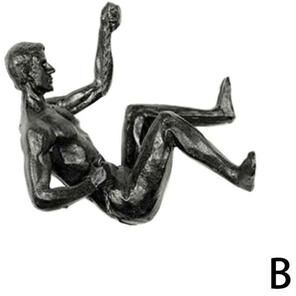
ModernMart Modern Rock Climber Wall Decor Resin Sculpture For Home And Office Inspiration bTransform any space into a symbol of ambition and perseverance with this striking climbing wall sculpture. Designed for those who admire strength, focus, and bold aesthetics, this piece captures the thrill of ascent in a sleek, modern form. Crafted...39,97 $*Shipping: 0,00 $Secure redirect to the provider
-
Why is there a beta-1,4-glycosidic bond in lactose?
The beta-1,4-glycosidic bond in lactose is formed between the glucose and galactose molecules. This bond is important because it determines the structure and properties of lactose. The beta configuration of the glycosidic bond in lactose allows for the formation of a specific three-dimensional structure that is essential for its function as a disaccharide sugar found in milk. This bond also influences the way lactose is digested by the enzyme lactase in the human body. **
-
How do you draw trehalose in a 2-11 glycosidic bond?
To draw trehalose in a 2-11 glycosidic bond, you would first draw two glucose molecules connected by an alpha-1,1 glycosidic bond. Then, you would add another glucose molecule to the first glucose molecule in the 2 position, forming a 1,2 glycosidic bond. Finally, you would add the last glucose molecule to the second glucose molecule in the 1 position, forming a 2,1 glycosidic bond. This structure represents trehalose in a 2-11 glycosidic bond. **
-
How do you draw trehalose in a 2-11 glycosidic linkage?
To draw trehalose in a 2-11 glycosidic linkage, start by drawing two glucose molecules connected by an alpha-1,1 glycosidic bond. Then, draw another glucose molecule connected to the first glucose molecule in the pair by an alpha-1,2 glycosidic bond. This creates the 2-11 glycosidic linkage in trehalose. The resulting structure should show three glucose molecules connected in a linear fashion with the 2-11 glycosidic linkage between the first and third glucose molecules. **
-
What are the differences between an ester bond and glycosidic formation?
An ester bond is formed when a carboxyl group of one molecule reacts with a hydroxyl group of another molecule, resulting in the formation of an ester and the release of water. This type of bond is commonly found in lipids and is important for energy storage. On the other hand, glycosidic formation involves the bonding of a sugar molecule to another molecule, typically another sugar or an alcohol, through the reaction between the anomeric carbon of the sugar and a hydroxyl group of the other molecule. This type of bond is important for the formation of carbohydrates and is commonly found in polysaccharides such as starch and cellulose. **
* All prices are inclusive of VAT and, if applicable, plus shipping costs. The offer information is based on the details provided by the respective shop and is updated through automated processes. Real-time updates do not occur, so deviations can occur in individual cases. ** Note: Parts of this content were created by AI.